Have been working constantly on the old film Japan Philosophical Landscapes film. Have made a new version in a different format and finally I managed to get an edited version which works. Certainly it is good enough to put up on Amazon Video Direct which I think is the perfect platform for this film. I never thought it would work on DVD. However I have since revised that opinion and I might release a DVD version as well. The Amazon video direct spot is perfect as it can be viewed as part of the Amazon Prime service which doesn’t entail buying the film although the film earns money for the amount of hours it is viewed. I have completed the closed captions. In many ways I have changed my attitude towards the film. I took it much too seriously and therefore feared criticism. Now I have an easier relationship to it and do not think of it as a real heavy laden piece of work but something much of an experiment – looser and adapted for the internet, concentrating more on the story rather than the preciseness of the images. Some things have worked well, better than I expected. The film fits within the overall project Japan Philosophical landscapes which includes the film Tokyo Journey and David Burliuk and the Japanese Avant-garde as well as the book Journey to Ogasawara. The film can be downloaded here: Japan Philosophical Landscapes
The new film about Tokyo is finally released from Michael Craig and Copernicus Films:
A short film about Tokyo and its unseen character. I don’t really know how to explain but if you spend a long time in Tokyo you start to feel the hidden world which lies beneath the electric and neon façade. Traces of a dream world or forgotten world which belies the ultra modern appearance of Tokyo and which seems to be a continuance of some other parallel world existing in the past but in some way eternal and forever present. Noh dramas give a whiff of this other world and how it can creep up on you. Usually the waki, an itinerant monk, old man or traveler meets a local person whom he questions about the the history of the area. As the conversation continues the waki draws out the shite’s story it gradually becomes clear that the shite is the ghost of a historical figure who is still clinging to this world either through desire for revenge or anger,or a desire for love. The ghost often asks the waki to pray for them to be released so they can be reborn in the Amida Buddha’s western paradise. The swirling neon dream world of Tokyo with its episodic visual context opposed to the spatial coordinates that we are normally used to in most cities, disrupt the senses which feast on the abundance of light which subvert structure and the visual plane. The Cityscape of Tokyo is a text-scape a kind of anti landscape. The city, a symbol which stands for something but also has its own intrinsic meaning- an hieroglyph We live in the age of light and nowhere is light, luminosity, a feature of the urban landscape as it is in Tokyo – it flows around and through the city like a liquid radiance. The Quintessential city of light and its neon landscape casts a luminous dome across the night sky turning dark night into a phosphorescent panorama. This urban phenomena of the night reminds us of the ancients of Japan who feared the darkness and longed for the dawn, for the comfort of clear light, for the sun goddess Amaterasu to remain.The film which is in post production will form a journey through the streets and known regions of Tokyo revealing anomalies which occur at boundaries which separate the apparent from the real and the interface between the sentient world and a hidden non sentient world. Its a phenomenon which occurs everywhere in Japanese literature. Murakami in Kafka on the Shore explains that the Tale of the Genji is filled with living spirits which could sometimes travel through space often unbeknownst to themselves. The world of the grotesque is the darkness inside us, what could be called our subconscious which was obvious to people and gave a focus for their fears. Until the invention of electric light the world was in darkness, the physical darkness and the darkness of our souls were mixed together with no boundary between them. In their past living spirits of literature such as Ueda Akinari who wrote “Tales of Darkness and Moonlight” living spirits were both a grotesque phenomenon and a natural condition of the human heart and people of that time were unable to conceive of these two things as being separate. However the darkness in the outside world has vanished but the darkness in our heart remains just as before. It remains sunken in our subconscious and as Murakami points out that estrangement can create a deep contradiction or confusion inside us.
J-FEST was a festival of Contemporary Japanese culture held in Moscow at the Central House of Artists. It was designed to showcase or present Japanese culture with an emphasis on youth and young people with the accent on phenomena like manga and anime, cosplay etc. The event was held in the House of Artists in the centre of Moscow. I wanted to the film the event partly out of curiosity and partly to collect material for the Japan-Philosophical Landscapes project and maybe get an interview or two with some of the main participants and speakers at the event. We arrived an hour or two after the event had started and I was surprised by how many people had turned up. Several hundred people were milling around the foyer and in the various exhibition points where events were being held.
A fashion show was just ending in the DNK hall with fashions from the Harajuku area of Tokyo. Outside in the foyer young Russians dressed in various costumes of manga and anime style were thronging around the two floors where the event was taking place. On one side of the foyer a whole wall had been given over to Kyoto Seiko Universtity with a video instalation dedicated on the theme of the recent earthquake and a mural being painted by students from the university.
The costumes were various but mostly on the themes of maids, cosplay, anime and manga with a strong influence of gothic but generally recognisable as derived from the street fashions of Harajuku.
At the press conference the panel consisted of the architect Takayuki Suzuki and May J the singer who heads the show J-Melo on NHK . J-Melo is a cult musical TV show Japanese TV channel NHK. It is broadcast in 180 countries and regions, and finally made it to Moscow. May J. is of Japanese, Iranian, Turkish, Russian, Spanish and English extraction.
It was strange to see these symbols and emblems of Japanese culture being played out in Moscow but one way of understanding this phenomena is with reference to Takamasa Sakurai was also on the panal. A journalist and a media content producer – he is convinced that the world will certainly have a “kawaii revolution.” He is convinced that due to the popularity of their pop culture, Japan could become a diplomatic mediator between different countries. In recent years, Sakurai-san has been an active lecturer in various countries.
The next day of the festival I managed to secure an interview with Takayuki Suzuki
Suzuki-sensei is trying to reconcile modern building and new forms of the 21st century with traditional Japanese ideas of beauty. Thus, in their universitybuilding, which he designed, he tried to include as much as possible, “the sky” which “need students to dream.” In his lecture he spoke about contemporary Japanese landscapes from the perspective of Japanese culture. Takayuki Suzuki: “Situated in the Far East, modern Japan is one of the centers of world culture and therefore for understanding the future we need to talk about the features of Japanese culture, characteristic of the Japanese urban landscape and everyday life of Japanese youth”.
After his interview I am hoping to use some of the material for the project Japan Philosophical Landscapes. His work and ideas may form the nexus between traditional and contemporary understandings of landscape and pinch together these two major themes in the film.
This section of the film focuses on the Silver Pavilion of Ginkaku ji. It suits my purposes over the more popular Golden Pavilion in Kyoto as it describes more directly the phenomenon of Philosophical landscapes. Most people are concerned with the Golden pavilion because of its obvious beauty, a striking golden temple set in the middle of a pond, its still golden reflection a mirrored upturned version of itself creating an uncanny sensation of a floating vision in mid air.
However in some ways the Silver Pavilion, Ginkaku ji, is no less beautiful despite its subdued presence if compared to the Golden Pavilion. The addition of moss covered grounds and what I would call “sandscapes” – abstract images made with sand and grit give it a unique quality as a Zen temple. They do not represent the landscape or depict a particular landscape but communicate an essence or idea. The cone of sand in the garden resembles Mount Fuji however this is but a surface interpretation. A mountain is seemingly a solid thing ostensibly made of hard rock. However mountains can fall or increase in size with volcanic eruptions. A miniature mountain of sand conveys this state of flux or indeterminateness of things and life which Zen Buddhism teaches. The volume of sand shaped into a cone is held in a state of static but fluid tension which can change with a gust of wind or a heavy downpour of rain and then reconstituted anew. Similarly sand as waves convey the inter penetrability of things. This constant blurring of borders between materials conveys the solid but non materiality of an idea given expression in three dimensional space. The essence of Zen Buddhism.
This section of the film focuses on the Silver Pavilion of Ginkaku ji. It suits my purposes over the more popular Golden Pavilion in Kyoto as it describes more directly the phenomenon of Philosophical landscapes. Most people are concerned with the Golden pavilion because of its obvious beauty, a striking golden temple set in the middle of a pond, its still golden reflection a mirrored upturned version of itself creating an uncanny sensation of a floating vision in mid air.
However in some ways the Silver Pavilion, Ginkaku ji, is no less beautiful despite its subdued presence if compared to the Golden Pavilion. The addition of moss covered grounds and what I would call “sandscapes” – abstract images made with sand and grit give it a unique quality as a Zen temple. They do not represent the landscape or depict a particular landscape but communicate an essence or idea. The cone of sand in the garden resembles Mount Fuji however this is but a surface interpretation. A mountain is seemingly a solid thing ostensibly made of hard rock. However mountains can fall or increase in size with volcanic eruptions. A miniature mountain of sand conveys this state of flux or indeterminateness of things and life which Zen Buddhism teaches. The volume of sand shaped into a cone is held in a state of static but fluid tension which can change with a gust of wind or a heavy downpour of rain and then reconstituted anew. Similarly sand as waves covey the inter penetrability of things. This constant blurring of borders between materials shows the solid but non materiality of an idea given expression in three dimensional space. The essence of Zen Buddhism.
The last few days have been a process of clearing away old obstacles and barriers in order to proceed with a several new projects. A few years ago we spent a fair amount of time in Japan shooting material for a couple of films which I have been working on and editing. The work on this project was interrupted by the Stanislavsky film “Stanislavsky and the Russian Theatre” which is now complete. After revisiting the Japanese project it is re-emerging as web documentary called “Japan – Philosophical Landscapes”. More information about it can be found here. Also the first part has been uploaded to the internet (see below).
At the same time a new site is being constructed to accommodate the Fairground Booth Project and discussions are taking place as to how best proceed in organising the logistics of the film and its corresponding documentary projects “Carnival and the Russian Theatre” and “Vahktangov and the Russian Theatre”. Once the site is up and running details will be released.
Some exciting work getting done at the moment. Working on the setting up of two web sites. One for a web documentary about Japanese art and culture called simply “Japan – Philosophical Landscapes”. The site is still in the process of construction so it is not fully operational as yet with some modules and elements hidden. It is a project which I have been working on and off for about two years ever since we returned from filming in Japan a second time over a three month period. At last it is taking some shape and I am ready to start releasing it in instalments on the web and have set up a new web site specifically for this purpose.
That is not to say that I have neglected the Russian Theatre project centred around Blok’s play The Fairground Booth and the two documentary films “Vakhatangov and the Russian Theatre” and “Carnival and the Russian Theatre”. I am in the process of building a website which will become the focus of this project with information, blogs and articles to chart it’s progress.
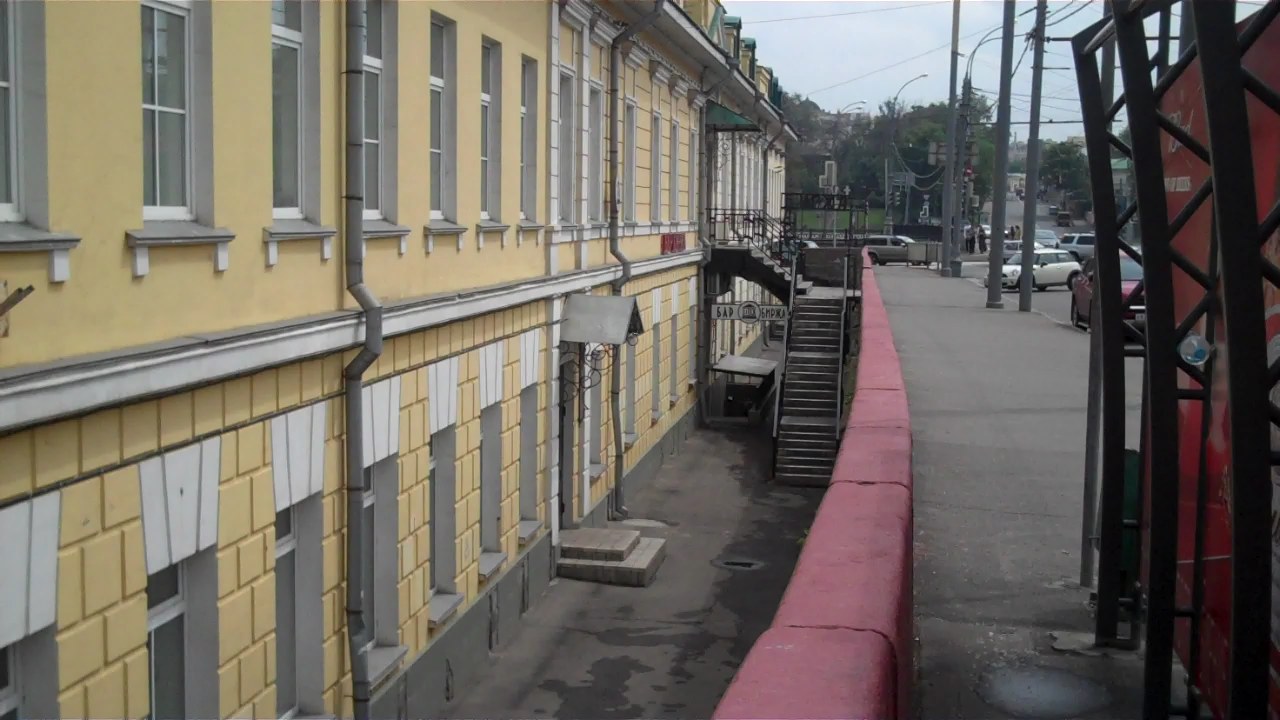
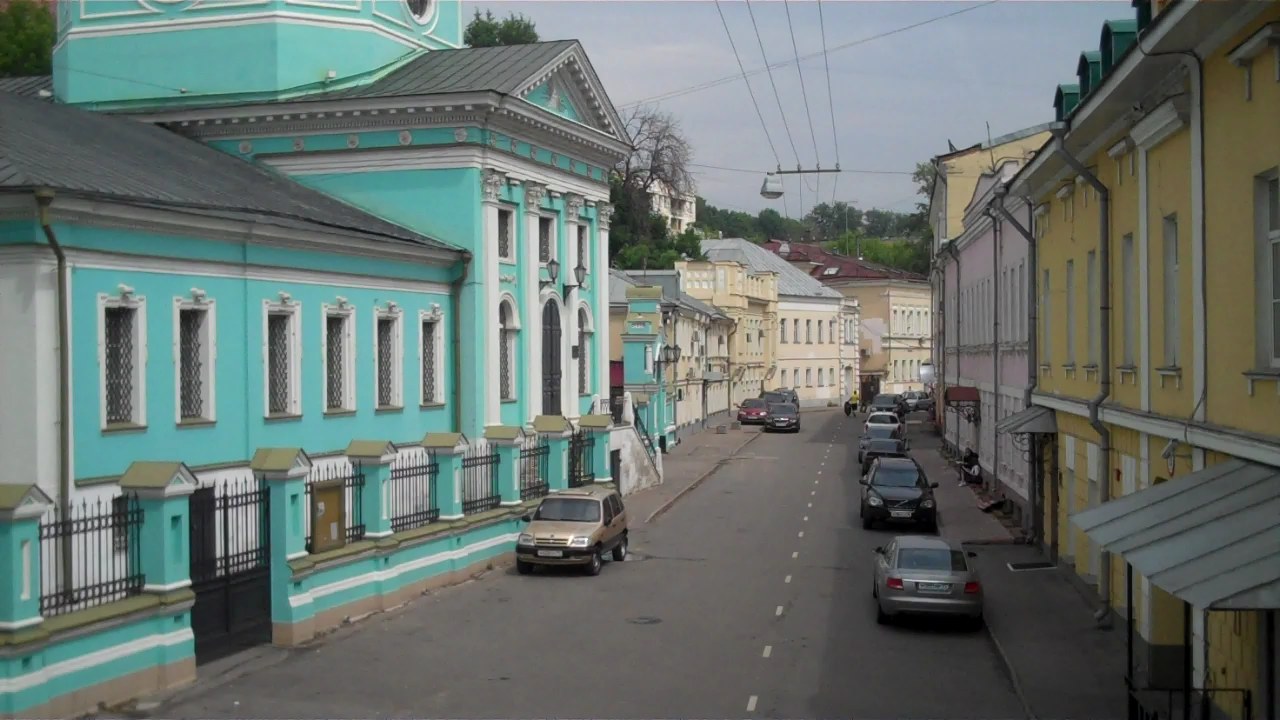
Last few days quite subdued while taking stock and trying to develop ideas for new projects. A few days working on the last pieces of the book “Journey to Ogasawara” which is gradually taking shape and will be ready to be published as an e-book at first and then as a paperback as well. Am editing footage which was shot on Ogasawara as part of the film “David Burliuk and the Japanese Avant-garde” but which wasn’t included in the film itself. Quite a lot of material as it turns out. I am editing the farewell send off which is part of the island’s tradition, a mixture of Japanese and it would seem Polynesian traditions. I need to add a few graphics and pictures and the e-book will be ready for publication. Summer in Moscow is a quiet affair with many people leaving at weekends for their dachas so that their is a sensation of Moscow being emptied which on the one hand is a pleasant alternative to the usual frenzied pace which is a character of the city. However it is an eerie sensation all the same. Did some filming on the flip camera around the location for film on which I worked some years ago across the road from the Library of Foreign Literature not far from Taganka. Walked back from there to Kitae Gorod and back home on the metro.
Just returned from St Petersburg for 24 hours shooting an interview for a private client. Excellent footage. The last time I was in St Petersburg was 1993 on the film Grushko. We were there slightly longer (3-4 months) at that time. Now the whole atmosphere has changed. Much more lively and open although a lot less stressful than Moscow. Travelled up on the new high speed express railway. Fantastic experience, better than air travel. Everything went well just a shame couldn’t stay longer.
Revisiting St Petersburg after all this time and essentially returning as a film maker whereas before I was working on somebody else’s production, has given me food for thought. The question that is exercising me the most is marketing my films – those which are already complete and those which will be available over the coming months. For instance I am putting the finishing touches to “The Japanese Garden – Art, Landscape and Meaning”. A film, which as its title suggests, will explore the artistic and philosophical meaning of Japanese gardens. As soon as this is ready I will be straight onto another project which is also in post production “Stanislavsky and the Metamorphosis of Russian Theatre. The problem I am finding is coordination of the marketing of this material across the Internet. It really is a full time activity in itself but an absolutely key component of film making and is becoming more so. I have a number of sites and blogs etc across social networks and need to draw them together into some kind of coherent strategy or at least align them along some strategy which I actually don’t have as yet.
One idea I have had for the release of “The Japanese Garden – Art, Landscape and Meaning” is to simultaneously publish an e-book in monthly instalments, recounting the 2 three month shoots in Japan which went into the making of the film. This I think will help promote the film, provide background information to the subject as well as adding an extra dimension to the whole project.
Returned from the Russian countryside after almost three weeks. Not exactly a place of Chekhovian atmospheres and moods. Such things are hard to find nowadays in the Russian countryside but with wild fires billowing in the hot summer wind and temperatures of up to 40 degrees, those lazy dreaming Russian summers seem like a thing of the long distant past. Which is something Chekhov was already hinting at in The Cherry Orchard. We left Moscow as the heat started to become unbearable and headed out to a an old soviet style holiday rest complex. It was built as a Pioneer camp for soviet school children but has been converted into a kind of holiday complex for adults. There we escaped the worst of the smog and smoke from the fires. I took the main computer with me and was able to get a considerable amount of work done especially on the Stanislavsky Film “Stanislavsky and the Metamorphosis of Russian Theatre”. The script is more or less fleshed out and ready for recording. I have a good narrator in mind, James Langton, an English actor who lives in New York. He has just completed the narration for the other film I have in post production “The Japanese Garden – Art, Landscape and Meaning”. The title may appear elsewhere under a different variation until I can settle on a version that I am happy with. James delivered the final text with the corrections I had requested and I can now start to complete the film. Excellent narrator of text and I am very happy with the result. I will work on “Stanislavsky and Metamorphosis” parallel with the Japanese film. Now back in Moscow and coping with the unendurable heat.
Its a long time since I have written anything here and I feel like I am letting people down and myself down so here is an update of what has been happening lately and what is likely to happen soon. Basically I have been continuing work on the two Japanese films in some earnest and have got them to a point where I will be able to go to the UK to record the voice overs. This will tie in with another project which I have been working on about Russian theatre. Its a completely new project which is taking up a great deal of time but I think it is worth it because it involves the collaboration of a well known acting college in London (More later). That will be coming up in April but at the moment I am still down to writing the script and researching the material. Arranging interviews is on the cards in the next few weeks or so. The film will require probably three interviews. I will also have to get some more archive material from the archive in Krasnogorsk which is a little way outside Moscow. It requires some tricky negotiation with the administration there but that’s another story. In addition to all of that there is continuous editing going on with the two Japanese films.(I hope to have titles sometime soon so I can stop calling them “the two Japanese films”. Talking about Japan, just to mention there was a superb conference this week for three days about Japanese culture and art here in Moscow. Eighteen speakers on a variety of subjects from mandalas, to contemporary Japanese art. Confirmed many of my researches and it added to my pool of knowledge about Japan.
 Copernicus Films